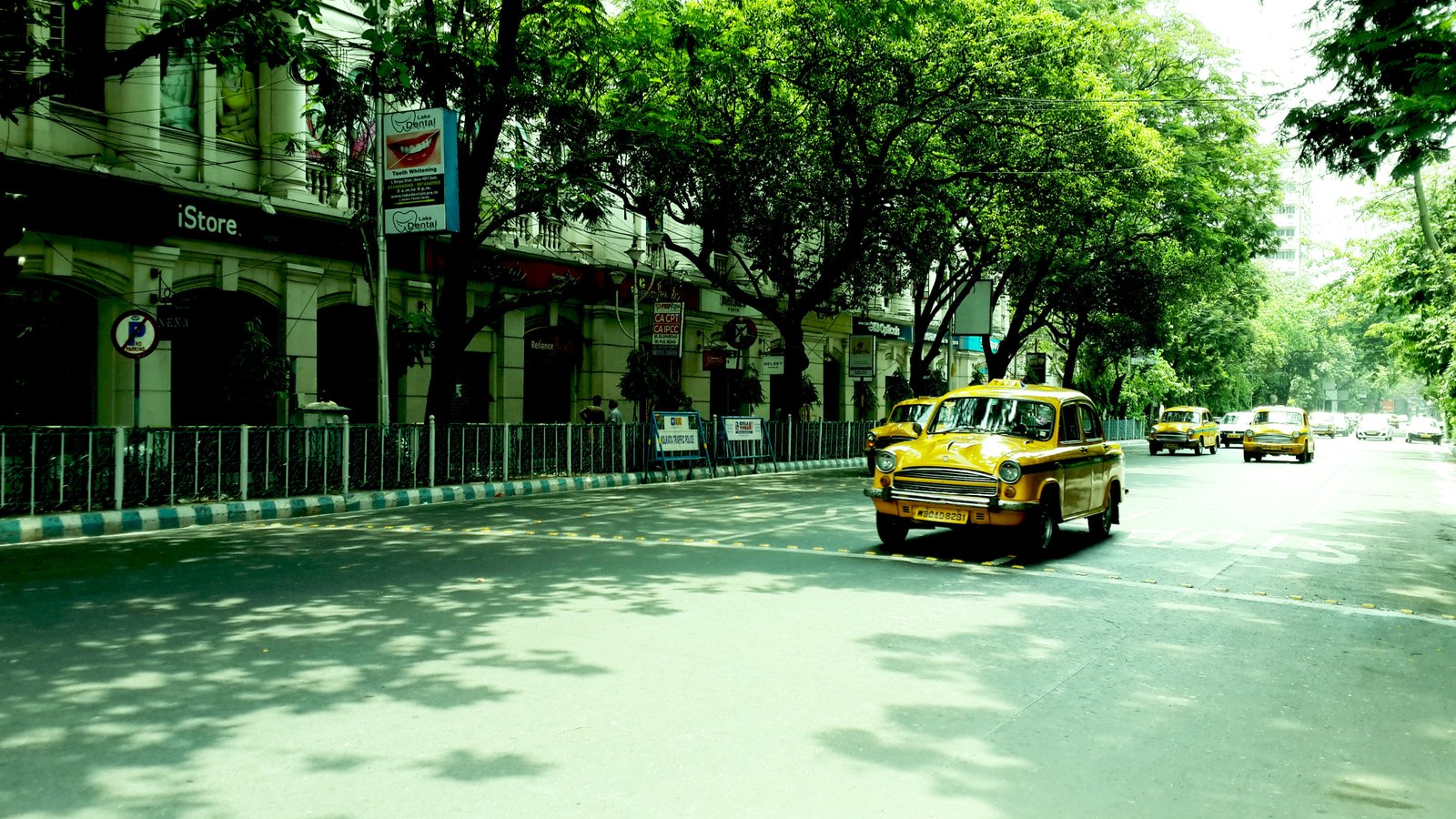
New Delhi, India’s national capital, is a relatively modern confection of imposing government buildings including Parliament, museums and wide leafy boulevards loosely centred on circular Connaught Place (officially now called Rajiv Chowk). To its north lies the formerly walled city of Old Delhi, or Shahjahanabad, built in the 17th-century by the Mughal Emperor Shah Jahan. Though long merged into one metropolis, the two have very different characters. New Delhi has space, parks, distinct neighbourhoods and a clutch of important monuments and architecture that reflect its ancient history. Old Delhi’s crowded streets, lanes and bazaars reflect its colourful medieval character and they cradle some of the city’s most memorable sights.
On arrival in Delhi: Having cleared immigration, collected your luggage and passed through customs, please make your way towards the exit of the terminal building where you will see a bank of people waiting for you. Amongst them will be Travel Counsellors Representative who will be waiting to greet you with a paging board with your name on.
You will be transferred to your hotel and assisted with check in. (Standard check in time at hotel is 1400 hrs)
Overnight at Hotel
Day 02: Delhi
Breakfast at Hotel.
Today proceed for The Five Senses Delhi Tour
A sensory journey through Delhi covering everything from its food, local arts and crafts, the must-see architectural marvels, to expertly navigating and allowing you to witness the organized cultural chaos that is Delhi.
A complete tour of Old and New Delhi! We’ve carefully curated a selection of experiences that will transport you across Delhi’s rich cultural history.
Experience for yourself the syncretism that has served as both Delhi’s greatest strength and vulnerability.
There isn’t a dearth of iconic sightseeing locations in the city, but for this tour, we focus on the two most beloved monuments that became inspirations or templates for all the other beautiful heritage structures. Humayun’s tomb, a spellbinding mausoleum is a favourite for any Delhiite! Your visit will be followed by a heritage craft workshop organised by an all-women NGO group that will touch your heart. Next, take a rickshaw ride through Shahjahanabad. Chaos thrives in the streets of Chandni Chowk, but as you cycle down, you’re transported by the magic in the air to the thriving Mughal era.
Next, you will indulge your sense of smell with an Ittar or perfume-making workshop. Visit an 8th-generation Ittar studio where you will get to smell and mix your unique concoction that can be named after you!
We’ll quickly stop to snack on some mouth-watering street food before proceeding to witness the glory and quietness of the Jama Masjid: a beautiful pocket of calm at the heart of Old Delhi’s mayhem.
To engage your sense of sound, we bring you to Bangla Sahib. The magic of seva (selfless service) that the Gurudwara envelopes you into is undeniable. What ties together this beautiful experience is the sweet sound of the Gurbani playing in the background. Next, head to calm your favourite sense – taste! You will enjoy a meal at a contemporary Indian restaurant!
Before going back to the hotel, on the way, we show you the parts of Delhi with British influence and talk about the architectural contrast as well as some interesting stories from that time!
Overnight at Hotel
Day 03: Delhi – Lucknow (Flight)
Known as the Constantinople of the east, Lucknow was a hub of Nawabi art, music, dance and architecture. Now the busy capital city of Uttar Pradesh, Lucknow sits in the centre of the state on the north-western shore of the Gomti River. A major centre of the Indian rebellion of 1857, Lucknow’s population participated actively in India’s independence movement, cementing its role as a major city in north India. Dining out in Lucknow is highly recommended, and a local delicacy is the traditional North Indian kebab is king, with many variations to feast on. Spend your days here admiring British era buildings, mausoleums, and the bazaars of the bustling old town.
After breakfast, check-out from the hotel and transfer to Delhi airport to board your flight to Lucknow.
Flight TBA
Upon arrival, you will be received at the airport and will be assisted for your transfer to the hotel. Standard check-in time is 1400 hrs.
Day 04: In Lucknow
After breakfast enjoy a full day sightseeing tour visiting Sadat Ali & Begum Tombs, Asifi Imambara, Rumi Darwaza, Asifi Mosque, Husainabad Complex and Satkhanda, Lucknow residency, La Martiniere, Dilkhusha Palace & Garden.
Sadat Ali & Begum Tombs
Not far from Kaiserbagh, built in a green grassland, is a pair of grandiose Maqbaras. Passersby cannot fail to admire the architectural grandeur of these edifices. The larger amongst these is the Maqbara of Sadat Ali Khan whereas the other one was made for his Begum Khurshidzadi. The Nawab was his father’s favourite son. His Baba Hazrat was proud of his ornamental handwriting. During his childhood Saadat Ali Khan and Asaf-ud-Daula were playmates. Sadat Ali Khan was a frequent visitor to the palace.
Asfi Imambara or the Great Imambara is a stately building pronounced to be the one of the most imposing in the world. It lies within the area known as the Mucchi Bhawan Fort long ago demolished. It was built by Nawab Asaf-ud-Daula in the year 1784 at a cost of a crore of rupees (about one hundred thousand pounds). Only a few years before his father, Shuja-ud-Daula, had transferred his royal residence from Fyzabad to Lucknow, so that there was scope in plenty for the erection of magnificent buildings.
Rumi Darwaza
The Rumi Darwaza, in Lucknow, Uttar Pradesh, India, is an imposing gateway which was built under the patronage of Nawab Asaf-Ud-daula in 1784. It is an example of Awadhi architecture. The Rumi Darwaza, which stands sixty feet tall, was modeled after the Sublime Porte in Istanbul.
Husainabad Complex
The Husainabad Imambara, constructed during the reign of Nawab Muhammad Ali Shah of Awadh (r.1837-1842), was a building used to celebrate the festival of Muharram. This complex of the Husainabad Imambara is rectangular and can be entered through four impressive gateways on each side. The complex consists of a forecourt and main court. The imambara is located within the main court and has two tombs on either side.
The British Residency
It is a famous historical landmark of this place. It is now in ruins and has been declared a protected monument by the Archaeological Survey of India. The British Residency was the place that served as a refuge for approximately 3000 British inhabitants during the time of the uprising of 1857. Lucknow was center of all British activities during the siege and the Residency became the monopolistic center of the British for almost 90 days.
La Martiniere, Standing on the banks of the river Gomti, this magnificent structure was constructed in 1794 by a French soldier – Claude Martin. The architecture of this building is a complete mixture of Indo-European schools. Italian, French, English and Gothic with a touch of Mughlai is how you can best describe this building. It held a place of pride in the heart of Claude Martin because he is said to have constructed it in memory of his love – Constance and named it Constantia. Before dying he expressed his last wish which was that his mortal remains should be laid to rest in the basement of this building. And so his wish was fulfilled. Claude Martin died on the 13th of September 1800. Claude had left a will which stated that Constantia along with two other buildings of his were to be given to the foundation of schools. La Martiniere – Calcutta, La Martiniere – Lyons and La Martiniere – Lucknow. The school at Lucknow was founded in 1840, forty years after the death of Claude Martin. Today Constantia stands tall as one of the most respected and reputed educational institutions of India.
Dilkhusha Gardens The ruins of lofty buildings built in ‘Gothic Style’ casting their long shadows on the natural carpet of lush green grass and beds of flowers, provide an ideal setting for picnics” (Yogesh Praveen). Dilkusha built by Sadat Ali Khan is a romantic setting for the lovers of the city. This palace was built by a European architect for the Nawab – Sadat Ali Khan. The Nawab only saw this building on its completion and the first words that came to his lips were “Dil Khush Hua” meaning “My Heart is Pleased”, thus it was aptly named “Dilkusha”. The palace and gardens were used as a country house and hunting lodge by the Nawab and his begums. Light game consisting of Deer and Bear were kept in the surrounding woods for the Begums to indulge in some hunting themselves. Part of the palace was also used as a Maternity Home for the wives of the Nawab.
Day 05: Lucknow – Varanasi
An ancient and deeply sacred city, Varanasi rests along the banks of the holy River Ganges and encompasses a wealth of beautiful riverside temples, stately old forts and vibrant markets. It’s considered the spiritual capital of Hinduism, and it’s widely believed that dying here will bring salvation. As a result, the city is home to a multitude of ghats – stone steps leading to the river –some of which are used for bathing rituals and others as cremation sites. An early morning boat ride along the Ganges offers an excellent way to take in the ghats and the bustling activity centred on them.
After breakfast, check-out from the hotel and drive to Varanasi (around 05 hrs. drive).
Upon arrival you will be assisted for check-in.
Later transfer to Old City and witness Evening aarti at the bank of river Ganges.
Ganga Aarti Ceremony
Varanasi is a sacred and oldest city located at the banks of the holy River Ganga. Where, Ganges Aarti is performed daily in the evening by a group of priests at the Dashashwamedh Ghat near famous Kashi Vishwanath Temple as a dedication to Shiva, Gange, Surya (Sun), Agni (Fire), and the entire universe. The whole ritual of the Ganges Aarti is performed by the seven students of the Vedas and Upanishads lead by the head priest of the Gangotri Seva Samiti in a well choreographed manner with a great synchronization. The whole event takes around 45 minutes. An announcement at 7.00 pm indicates the beginning of the Aarti.
Day 06: In Varanasi
Early morning boat ride on river Ganges followed by a walk through th Ghats and temples.
Boat ride on the River Ganges
Sunrise boat ride on Ganga in Varanasi is a spiritual experience in itself. Sunrise boat ride on Ganga in Varanasi is a memorable experience and not be missed. It gives a glimpse of morning life along the ghats in Varanasi. If you are lucky you can see stunning views of sun rising in the eastern horizon. Ganga is Varanasi and Varanasi is Ganga. For locals it is the lifeline. For devout pilgrims she is “Ganga Mayya – the mother who will wash away all the sins”. We are fascinated by the energy of the people, their beliefs and devotion to god. We could see people from all walks of life gathering on the ghat to worship the sun as he came up in the eastern horizon.
After visit back to hotel and relax.
Late afternoon proceed for visit of Sarnath.
Sarnath (Sarnath Museum is closed on Fridays)
Sarnath is one of the most important Buddhist pilgrimage centres in India. It is here that Buddha came after reaching enlightenment at Bodh Gaya (present-day Bihar), and where he first began his teachings of Dharma and the four noble truths to his five disciples. It is also an important place for the followers of Jainism. While many of the ancient buildings and structures at Sarnath were damaged or destroyed by the Turks, relics remain in the form of ruins that can be visited, or artefacts held in the Sarnath Archaeological Museum, which also houses some of the greatest treasures of Indian Buddhist art, including almost 300 images. The Deer Park, which is the site of Buddha’s first teachings, is maintained as an animal park and still home to resident deer.
Day 07: Varanasi – Kolkata
Located along the eastern bank of the Hooghly River in the lower Ganges Delta, Kolkata is the capital of the Indian state of West Bengal. This 350-year-old metropolis is the heart and soul of eastern India with its crumbling colonial architecture, elegant gardens, countless temples and bustling bazaars. Celebrated as the birthplace of the early 20th-century Bengal Renaissance, Kolkata is a major centre for drama, art, film, theatre, literature, spirituality and music. Visitors can roam the streets and soak up the atmosphere of faded grandeur, or take a ride in a rickshaw to one of the many Indian restaurants serving mouth-watering Bengali cuisine. Must-see highlights include: the Victoria Memorial, with its east-meets-west architecture; the Indian Museum, with its range of rare artefacts; and the Kali Temple, an important pilgrimage centre for Hindus.
After breakfast, check-out from the hotel and transfer to Varanasi airport to board your flight to Kolkata.
Flight TBA
Arrive Kolkata. Upon arrival, you will be received at the airport and will be assisted for your transfer to the hotel. Check-in at hotel. Hotel’s check-in time is 1400 hrs.
Rest of day at leisure.
Overnight at hotel
Day 08: In Kolkata
After breakfast proceed for a Heritage walking tour “Calcutta during the British Raj” [Duration : 03 Hrs]
Beyond the known legends of the British in Cal, one must delve deep to analyse the strategic interests of the Company and the Monarch to initiate their three centuries strong rule in the Indian Sub-Continent. What made Calcutta special for the English, is perhaps not understood well in texts and literature and can be grasped well on a heritage walk along the ‘Office Paras’ of the old city.
Calcutta was not just a city of colonial grandeur; it was the very epicenter of British strategic ambitions in India. Beyond the whitewashed mansions, Gothic churches, and grand colonial clubs, there lies an untold story—one that traces the economic, military, and administrative maneuvers that allowed the British to hold their grip over the Indian subcontinent for three centuries.
But why Calcutta? Why did the English East India Company choose this unassuming cluster of villages along the Hooghly River as their imperial nerve center? The answer lies in the Office Paras of Old Calcutta—the districts where British bureaucrats, merchants, bankers, and traders worked tirelessly to build an empire.
Enjoy heritage walk through these historic business quarters, where we peel back layers of history to understand how commerce, governance, and control intersected in the colonial era—and why Calcutta was the linchpin in Britain’s imperial strategy. Calcutta was not just a capital—it was the brain, the treasury, and the engine of the British Empire in India. While textbooks often emphasize grand monuments and political battles, this walk explores the hidden machinery of British rule—the offices, banks, ports, and social clubs that sustained their power.
Move beyond clichés and discover why Calcutta was vital to Britain’s imperial plans.
Explore the everyday spaces where colonial history unfolded. Many of these institutions still function, offering a rare glimpse into a past that continues to shape India’s present. Understand how Calcutta’s financial institutions built Britain’s wealth while leaving India impoverished. Step into the corridors of colonial power and witness the real story of British Calcutta!
Post lunch enjoy a half day sightseeing tour of Kolkata.
Howrah Bridge
This striking landmark – a huge 2,300ft-long riveted-steel cantilever bridge across the Hooghly River – links the eastern side of down-town Kolkata with Howrah, a vital transport hub with one of India’s largest and busiest railway stations. Opened in 1943 as a much-needed replacement for an earlier pontoon bridge, it has become one of Kolkata’s iconic landmarks because of its size (world’s third longest cantilever bridge when built but now the sixth) and extraordinary traffic – reputedly 100,00 vehicles and 150,000 pedestrians daily. Now no longer the city’s only river bridge, it has featured in numerous Indian films since the 1950s.
Victoria Memorial Hall (Closed on Mondays)
Completed in 1921 to honour Queen Victoria (the first to use the title ‘Empress of India’) who had died twenty years earlier, this is one of the city’s most famous and striking buildings. Built from white marble in the celebrated Indo-Saracenic style, its large central dome topped by an ‘Angel of Victory’ statue and subsidiary domed cupolas grace the Kolkata skyline from sixty-four acres of well-maintained gardens. Allegorical statues (depicting ideas and principles such as charity, prudence and learning) augment its air of importance and ‘power’. Inside stand over two dozen galleries with exhibits ranging from portraits and sculpture to antiquarian books, arms and a visual history of the city. Here too is a notable collection of remarkable aquatints produced by Thomas and William Daniell, painters whose extensive late 18th-century journeys across north India provided unrivalled views to the British and Europeans back home of the lure and exoticism of India. The Memorial’s formal gardens with their quadrangles, ponds and assorted statues of nobles form a small part of a much larger green expanse – the Maidan – encompassing a race track, the original Fort William (now used by the Indian Army) and Eden Gardens, India’s oldest and second largest cricket stadium
Kumartuli (Potters Colony)
The settlement of Kumartuli, meaning “potter locality” (Kumar = potters and Tuli = locality), is over 300 years old. It was formed by a bunch of potters who came to the area in search of a better livelihood. Nowadays, around 150 families live here and earning a living by sculpting idols for the various festivals. As for equipment and materials, they have clay, straw, ropes (made from coconut fiber), bamboo sticks and two skillful hands that can transform the shapeless mound of clay into a beautiful and awe inspiring idols of Hindu Gods and Goddesses.
You can visit Indian Coffee House and College Street too which isn’t too far away from the area and is famous for the hundreds and thousands of bookstalls around the area including a second-hand book market.
Indian Coffee House is a cafe located opposite the Presidency University in College Street, the most famous of Indian Coffee House branches in Kolkata. It has been for a long time a regular hang out and a renowned meeting place (adda) for intellectuals and students. At the iconic Indian Coffee House on Kolkata’s College Street — the birthplace of several political, literary, and cinema movements in Bengal — some things have changed, and some things haven’t. Several talented and illustrious persons from different streams have been thronging this renowned adda for a long time.
Overnight at hotel
Day 09: Kolkata – Bagdogra – Darjeeling
Tucked away in the north-eastern corner of India, Darjeeling is best known for its rolling tea plantations and ‘Toy Train’ which meanders along the precipitous mountain routes of the Darjeeling Himalayan Railway. A picturesque hill station, Darjeeling offers access to a number of Buddhist monasteries, tea estates, railway journeys and is a great base for trekking in the Himalayas. Impressive jagged peaks of the snow-capped Himalayas can be seen from town with Tiger Hill offering astounding views at first light.
After breakfast, check-out from the hotel and transfer to Kolkata airport to board your flight to Bagdogra
Flight TBA
Upon arrival at Bagdogra airport, you will be met and then drive to Darjeeling (70 Kms / 03 Hrs)
Check-in at hotel. Hotel’s check-in time is 1400 hrs.
Rest of the day is at leisure.
Day 10: In Darjeeling
After breakfast enjoy a Heritage walking tour “ Summer Capital Walk” [Duration : 03 Hrs]
The former Summer Capital of the British Raj retains its original colonial facade. Take a walk to rediscover the quaint town hidden in the cacophonies of today’s Darjeeling. The former Summer Capital of the British Raj retains its original colonial facade. Take a walk to rediscover the quaint town hidden in the cacophonies of today’s Darjeeling. A refreshing take on the history of Darjeeling and its establishment as the Summer Capital. Stories, myths, and anecdotes from the bygones of one of British India’s first natural sanatoriums. In the footsteps of the Imperialists that once ruled Darjeeling.
Late afternoon toy train ride to Ghoom & back (Subject to operation of this train & availability of the seats)
TOY TRAIN The spectacular landscape unfolds as the 2-foot gauge Darjeeling Himalayan railway, opened in 1881, labours at about 10 mph criss-crossing the road. It has tiny 4-wheel locomotives (some over 100 years old) like living legends. One can experience the sound, smell and romance of a bygone era. DHR is a work of genius and technological achievement of 1881. It has social and cultural importance. It is beautiful and has outstanding universal appeal. Based on its unique features, it is considered to be of lasting significance to mankind.
Note: – Visit to Ghoom Monastery cannot be done while returning from Tiger Hill due to new traffic regulations, this visit can be done during the day tour or at the time of toy train ride.
Day 11: In Darjeeling
Early morning excursion to Tiger hill & back.
Tiger Hill– It is 13 kms from Darjeeling and one can see beautiful sunrise and Himalayan Range like Kanchandzonga , Mount Everest etc. One can see the horizon changing colors just before sunrise and then the entire Himalayan range turn golden. It is truly a majestic sight.
Note – Tiger Hill in Darjeeling cannot be guaranteed at the time of sunrise as there is a limitation on the total number of vehicles permitted to visit every day, in case the visit cannot be done early in the morning, the point will be visited anytime during the day.
Later visit HMI/Zoo (Both Closed on Thursday), Tibetan Refugee Centre (Closed on Sunday)
Himalayan Mountaineering Institute/Padmaja Naidu Himalayan Zoological Park:-(Closed on Thursdays) The Himalayan Mountaineering Institute was started in Darjeeling when Tenzing Norgay climbed Everest to give training to learn Mountaineering and other adventure sports related to mountaineering and in that Institute one can see equipment etc.used by Mr. Tenzing Norgay and Everest Museum having complete details on Everest attached to institute one can visit Himalayan Zoological Park where one can see Himalayan animals like Snow Leopard, Tibetan Wolf, Tibetan Yak, Himalayan Black Bear and several varieties of birds.
Tibetan Self– Help Centre Or Refugee Centre:- (Closed on Sundays) This institute is run by Tibetan Refugees to preserve their handicrafts and one can see making of Tibetan Carpets, Leather work, Paintings and Wooden work etc.
Rest of day at leisure.
Overnight at hotel.
Day 12: Bagdogra – Darjeeling – Delhi
After breakfast, check-out from the hotel and transfer to Bagdogra airport (70 Kms / 03 Hrs) to board your flight to Delhi.
Flight TBA
Upon arrival, you will be received at the airport and will be assisted for your transfer to the hotel near Delhi airport.
Check-in on arrival. Standard check in time is 1400 Hrs.
Overnight at hotel
Day 13: Depart Delhi
In time transfer Delhi International airport to board your fight for onward destination.