India’s largest city, Delhi, has been one of the country’s commercial and economic hubs for centuries and, as a result, is incredibly rich in culture and history. Made up of the ancient walled city of Old Delhi and the more modern sector, New Delhi, the city encompasses a staggering array of beautiful architecture, notable monuments and age-old temples, including three UNESCO World Heritage Sites – the Red Fort, Qutab Minar and Humayun’s Tomb. Other key attractions include the 17th century Chandni Chowk marketplace – still one of the city’s most popular retail centres today, particularly for jewellery and traditional Indian saris; the iconic Bahà’i Lotus Temple – an award-winning architectural gem; and the Jama Masjid, India’s largest mosque.
On arrival in Delhi: Having cleared immigration, collected your luggage and passed through customs, please make your way towards the exit of the terminal building where you will see a bank of people waiting for you. Amongst them will be Travel Counsellors Representative who will be waiting to greet you with a paging board with your name on.
You will be transferred to your hotel and assisted with check in. (Standard check in time at hotel is 1400 hrs).
Overnight: Eros Hotel
The Eros Hotel is located in South Delhi and is just 35 minutes away from the airport. Accommodation at the hotel features a selection of 216 air-conditioned guest rooms and suites. All are equipped with comfortable bedding, free Wi-Fi and an in-room safe. The hotel also features a variety of on-site dining facilities where guests can enjoy authentic Indian cuisine. Additional facilities include conference and wedding rooms, a health club and an outdoor swimming pool.
Day 2: In Delhi
Breakfast at Hotel.
Today proceed for The Five Senses Delhi Tour
A sensory journey through Delhi covering everything from its food, local arts and crafts, the must-see architectural marvels, to expertly navigating and allowing you to witness the organized cultural chaos that is Delhi.
USP – Delhi 101: A complete tour of Old and New Delhi! We’ve carefully curated a selection of experiences that will transport you across Delhi’s rich cultural history. Experience for yourself the syncretism that has served as both Delhi’s greatest strength and vulnerability.
There isn’t a dearth of iconic sightseeing locations in the city, but for this tour, we focus on the two most beloved monuments that became inspirations or templates for all the other beautiful heritage structures. Humayun’s tomb, a spellbinding mausoleum is a favourite for any Delhiite! Your visit will be followed by a heritage craft workshop organised by an all-women NGO group that will touch your heart. Next, take a rickshaw ride through Shahjahanabad. Chaos thrives in the streets of Chandni Chowk, but as you cycle down, you’re transported by the magic in the air to the thriving Mughal era.
Next, you will indulge your sense of smell with an Ittar or perfume-making workshop. Visit an 8th-generation Ittar studio where you will get to smell and mix your unique concoction that can be named after you!
We’ll quickly stop to snack on some mouth-watering street food before proceeding to witness the glory and quietness of the Jama Masjid: a beautiful pocket of calm at the heart of Old Delhi’s mayhem.
To engage your sense of sound, we bring you to Bangla Sahib. The magic of seva (selfless service) that the Gurudwara envelopes you into is undeniable. What ties together this beautiful experience is the sweet sound of the Gurbani playing in the background. Next, head to calm your favourite sense – taste! You will enjoy a meal at a contemporary Indian restaurant!
Before going back to the hotel, on the way, we show you the parts of Delhi with British influence and talk about the architectural contrast as well as some interesting stories from that time!
Day 3: Delhi – Shimla
Shimla, lying deep in the foothills of the Himalayas, is the capital city of Himachal Pradesh and the gateway into the more remote northern regions of Kashmir. It is also the stop-off for travellers venturing into the Kullu and Spiti Valleys. Sitting at an altitude of 2159 metres, the city is blessed with a cool climate and beautiful views of river valleys, pine forests, apple orchards and steep mountains covered with maize terraces. The Mall, a long, winding pedestrian-only walkway, is the commercial and social hub of Shimla, while those looking for natural beauty should head uphill through the forest to Jakhu Temple or follow one of the many forest trails in the eastern part of Shimla. To the south of the city, the bazaars bustle with local flavour.
Early morning you will be assisted & transferred to railway station to board the train for Kalka.
Train Kalka Shatabdi
Departs Delhi 0740 Hrs
Arrives Kalka 1145 Hrs
Upon arrival at Kalka, you will be assisted & transferred to Solan [approx. 40 kms/ 02 hours drive]
Arrive Solan and board the Toy Train to Shimla.
Train Himalayan Queen
Departs Solan 1440 Hrs
Arrives Shimla 1730 Hrs
Toy Train – The Shimla – Kalka rail route, offers the charm of old-world travel amidst lofty pines and lush green, misty mountains. This is one of the four narrow gauge rail routes on hill terrain in the country. Laid out on a 96 km long narrow gauge track that passes through 103 tunnels and across more than 800 bridges and viaducts, it is one of the most beautiful hill railways in India. It was considered the “crown jewel” of the Indian National Railways during British times. Flanked by hills on both sides, the rail line, like twin threads of silver, clings to the steep cliffs and ventures boldly over bridges, built over tiny streams that show off their radiance in the sunlight. The cool breeze sweeps across your face as the train makes an arduous climb of almost 4800 feet.
Arrive Shimla and check in at the hotel.
Overnight: The Oberoi Cecil
Set amidst the majestic Himalayan ranges, The Oberoi Cecil is an opulent accommodation situated in the quieter end of the bustling Mall Road. Guest rooms and suites each feature air-conditioning, high-speed internet, a mini bar, a 32″ LCD television and a DVD player. Hotel facilities include a restaurant, an expansive swimming pool and a spa. Guests can learn about the country’s colonial history by stopping by notable sites including Gorton Castle, St. Michael’s Cathedral, and The Mall.
Day 4: In Shimla
After breakfast enjoy half day sightseeing tour of Shimla covering Indian Institute of Advanced Studies, Sankat Mochan temple and the Mall road.
Indian Institute of Advanced Study (Closed on Monday)
Also called the Vice regal Lodge, the Indian Institute of Advanced Study is a research institute set in a historical building in Shimla. As a residential centre for research, it encourages creative thinking in areas of deep human significance. The environment of the institute is eminently suitable for academic pursuits, especially in select areas of the humanities, Indian culture, religion and the social and natural sciences. It also has a comprehensive library and documentation facilities.
Sankat Mochan Temple
A famous temple of Lord Hanuman in the region is located amidst the mist-clad mountains, providing a serene and scenic environs, making visitors get lost in the mesmerizing atmosphere of the place. The temple was built in the decade of 1960s. Originally dedicated to Lord Hanuman, the temple now also bears the idols of Lord Rama, Lord Shiva, and Lord Ganesha in various complexes.
Shimla Mall Road
The Mall Road is one of the most popular tourist attractions in Shimla that enfolds many hotels, restaurants, clubs, bars, banks, shops, offices, post offices, and tourist offices. People can walk up and down the Mall road slowly and enjoy the scenic views of the nature while sipping their favourite coffee. The Mall road is connected to the Ridge at the Scandal point, where a statue of the nationalist leader Lala Lajpat Rai has been erected.
Day 5: Shimla – Amritsar
Armritsar is the spiritual capital of the Sikhs and gained its name, meaning ‘Holy Pool of Nectar’, from the body of water around Harmandir Sahib, the Golden Temple. The temple itself is a must see, receiving well over 100 000 people every day, who come to worship at the holy shrine. It is located just 28 kilometres from the Pakistani border post, and a highlight of the area is the Wagah border ceremony that occurs every evening at sunset. Full of pomp and flair, soldiers from both sides parade and lower the two nation’s flags in a ceremony punctuated with theatrics.
After breakfast you will be driven to Amritsar [approx. 300 kms/ 07 hours drive]
Arrive Amritsar and check in at the hotel.
Spend rest of the day at leisure.
Overnight: Courtyard Amritsar
Located 3.5 km from the iconic Golden Temple, Courtyard Amritsar offers stylish accommodations with luxurious bedding and beautiful artwork throughout the hotel. Nearby attractions include Wagah Border and Jallianwala Bagh. The hotel’s elegant rooms include complimentary Wi-Fi access, private bathrooms, mini-fridges, air-conditioning and flat-screen TVs. Guests can enjoy delicious dishes at several on-site dining options. Additional amenities and services include an outdoor swimming pool, a spa, a fitness centre, room service and daily housekeeping.
Day 6: In Amritsar
A full day tour of Amritsar visiting Golden Temple, Jallianwala Bagh and Wagah border.
The Golden Temple
Guru Ka Langar (Langar Hall): Community Kitchen
The tradition of serving langar Initiated by Guru Nanak Dev Ji and then established by the 3rd Guru Sri Guru Amar Dass Ji at Goindwal. Even the Mughal King Akbar came and sat among the ordinary people to share langar. The institution of Guru ka Langar has served the community in many ways. It has ensured the participation of women and children in a task of service for humanity. Women play an important role in the preparation of meals, and the children help in serving food to the pangat. Langar also teaches the etiquette of sitting and eating in a community situation, which has played a great part in upholding the virtue of sameness of all human beings; providing a welcome, secure and protected sanctuary.
Everyone is welcomed to share the Langar; no one is turned away. Each week a family or several families volunteer to provide and prepare the Langar. This is very generous, as there may be several hundred people to feed, and caterers are not allowed. All the preparation, the cooking and the washing-up is done by volunteers and or by voluntary helpers (Sewadars).
In the Golden Temple Community Kitchen at an average 75,000 devotees or tourists, take langar in the Community Kitchen daily; but the number becomes almost double on special occasions. On average 100 Quintal Wheat Flour, 25 Quintal Cereals, 10 Quintal Rice, 5000 Ltr Milk, 10 Quintal Sugar, 5 Quintal Pure Ghee is used a day. Nearly 100 LPG Gas Cylinders are used to prepare the meals. 100’s of employees and devotees render their services to the kitchen.
The Jallianwala Bagh Garden
The Jallianwala Bagh Garden is a fenced garden with several entrances, located in Amritsar, India. This public garden is home to a national memorial, which serves as a lasting tribute to an innocent crowd of peaceful celebrators who lost their lives during a massacre by the British army. Today, the garden is mostly visited by tourists to learn about the killings and to admire the vast greenery or simply for relaxation and meditation.
Wagah Border
The Wagah Border links the towns of Amritsar in India and Punjab in Pakistan. The border serves as a transit point for goods and commuters between India and Pakistan and plays host to the daily lowering of the flag ceremony performed by the Border Security Force of India and the Pakistan Rangers in Pakistan. This ceremony commemorates the unity and cooperation between the two nations who were once rivals.
Day 7: Amritsar – Delhi
Breakfast at the hotel. Morning at leisure.
NOTE: Standard check out time at the hotel is 1200 noon.
Later at an appropriate time you will be assisted & transferred to railway station to board the train for Delhi.
Train Shatabdi Express
Departs Amritsar 1650 Hrs
Arrives Delhi 2315 Hrs
Upon arrival at Delhi, you will be assisted & transferred to the hotel for check in.
Overnight: Eros Hotel
The Eros Hotel is located in South Delhi and is just 35 minutes away from the airport. Accommodation at the hotel features a selection of 216 air-conditioned guest rooms and suites. All are equipped with comfortable bedding, free Wi-Fi and an in-room safe. The hotel also features a variety of on-site dining facilities where guests can enjoy authentic Indian cuisine. Additional facilities include conference and wedding rooms, a health club and an outdoor swimming pool.
Day 8: Delhi – Agra
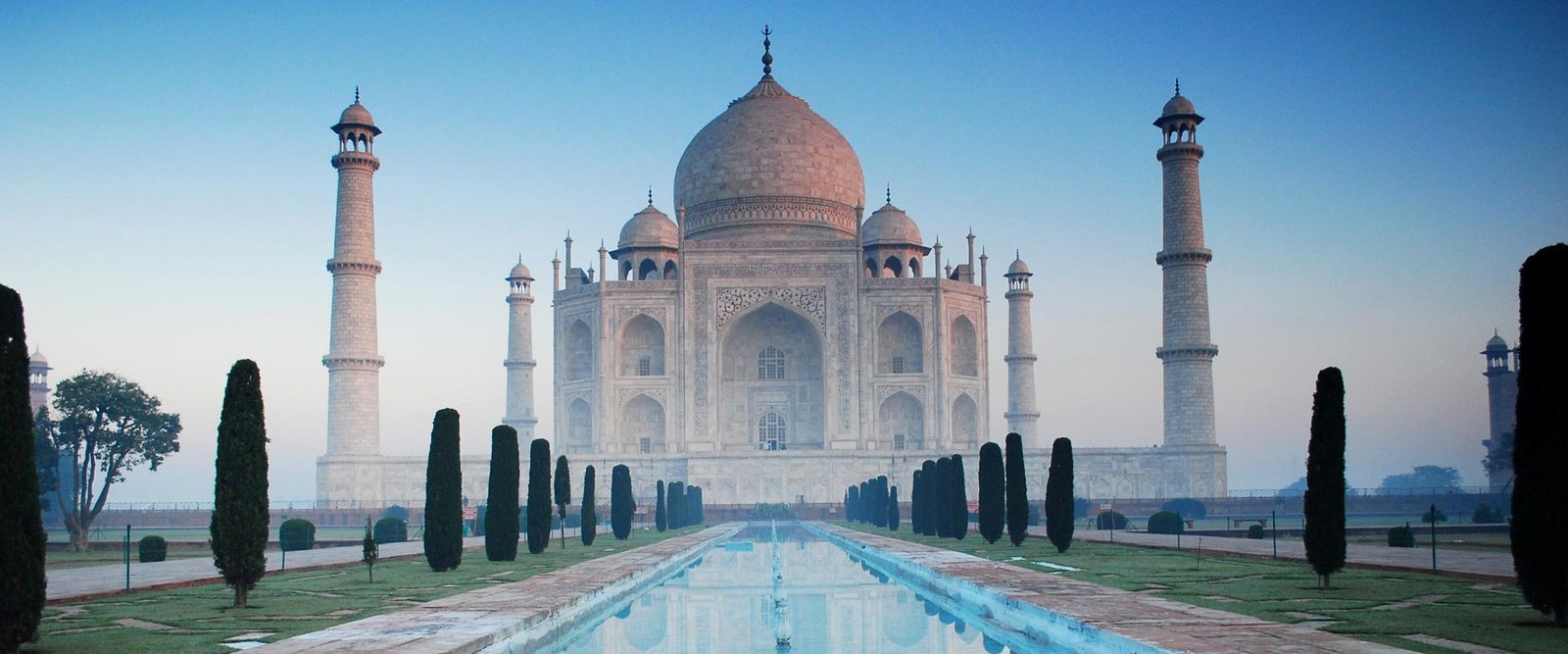
Home of the world-famous Taj Mahal, Agra is one of India’s prime tourist destinations for specifically this reason, though its attractions also extend to an array of other impressive historical sights. These include the red-hued Agra Fort, the sacred Jama Masjid mosque and Itmad-ud-Daulah’s tomb, with its white marble facade embellished with intricate inlaid designs and semi-precious gems. The Taj, however, is in a league of its own and needless to say is a must-see for any visitor to the city. Commissioned by the Mughal emperor Shah Jahan in the 15th century as a memorial to his beloved wife Mumtaz Mahal, it is an architectural masterpiece of exquisite craftsmanship and perfect proportions.
After breakfast, Travel Counsellor Representative will assist & transfer you to Delhi railway station to board the train for Agra.
Met on arrival at Agra and proceed directly for a visit to Agra Fort and later check-in at the hotel (normal check-in 1400 hrs).
Afternoon at leisure and visit Taj at sunset (closed on Friday).
Agra Fort
Known as the Red Fort of Agra, this walled imperial city was founded in 1565 by the Emperor Akbar (1556-1605) and is a well-deserving UNESCO World Heritage site, located just 2.5 kilometres from the famous Taj Mahal. Its palaces, grand mosques and elaborate public hall are crafted from pink-red sandstone and are testament to an era when Indo-Muslim art, strongly marked by influences from Persia, was at its height. Emperor Shah Jahan, who built the Taj Mahal for his deceased wife, was imprisoned by his son Aurangzeb in Agra Fort. He is said to have died in the Musamman Burj, a marble tower he himself built, with one of the most alluring views of the Taj Mahal.
Sunset visit Taj Mahal (Closed on Fridays)
The iconic Taj Mahal is not only an architectural masterpiece, a UNESCO World Heritage Site and one of the new Seven Wonders of the World – it’s also the enduring legacy of a royal love story. It was commissioned in the 15th century by the Mughal Emperor Shah Jahan after the death of his third and favourite wife, Mumtaz Mahal, to serve as her final resting place and a symbol of his eternal affection for her. Combining Islamic, Persian, Ottoman Turkish and Indian design elements, it’s an awe-inspiring structure of elegant domes and white marble, which changes colour along with the light – pink at sunrise, pearly white in the afternoon and silver-gold in the full moon.
Overnight: Courtyard by Marriott Agra Hotel
The newest Marriott hotel in Agra located in Fatehabad Road and just 5 minutes away from the magnificent Taj Mahal serves as a perfect location for visitors. The hotel features a number of services to meet the needs of business and leisure travellers. Courtyard by Marriott Agra features a number of amenities, including the Spa with rejuvenating treatments, the fitness centre and an indoor swimming pool, as well as the hotel’s concierge services, a 24-hour business centre, free WI-FI and an Executive Lounge.
Day 9: Agra – Jaipur
Fringed by the rugged Aravali Hills, Jaipur is the capital and largest city in India’s northern state of Rajasthan. This city is famed for being India’s first planned city featuring a multitude of pink terracotta buildings within the walled historic centre, earning it the nickname, ‘The Pink City’. Jaipur falls within the Golden Triangle, a popular tourist circuit, which includes Delhi, Jaipur and Agra, and serves as a gateway to the neighbouring desert cities of Jaisalmer and Jodhpur. This colourful city is a combination of tradition and modernity and offers visitors vibrant bazaars, lavish palaces and ancient temples. The salmon-hued old city is home to the opulent City Palace, encompassing an impressive assortment of palatial structures, sprawling gardens, courtyards and buildings. Do not miss the fairy-tale splendour of the Amber Fort, set against the backdrop of the arid landscape.
Option to do an early morning sunrise visit Taj Mahal.
Return to the hotel for breakfast.
Later you will be driven to Jaipur (approx. 235 kms/ 06 hours’ drive) with a stop enroute at Fatehpur Sikri.
Fatehpur Sikri
This world heritage site is rated as one of the best-preserved collections of Mughal architecture in India. Surrounded by a six kilometre wall, with the fourth being a lake at the time, a day can be spent exploring the elaborate structures within. Marvel at the impressive Jama Masjid mosque, the detailed palaces built for Emperor Akbar’s wives, the public and private discussion halls and vast ornamental pool; all of which took over 15 years to conceptualise and build.
Overnight: Jaipur Marriott Hotel
Jaipur Marriott Hotel is entrenched in the cultural legacy of the Pink City and complemented by inviting spaces that stand for refined elegance and a contemporary look. Strategically located near the airport, guests can delight in spacious guestrooms adorned with traditional characteristics, yet complete with modern amenities. Well-equipped to offer guests truly elevated experiences, Jaipur Marriott offers 31000 sq. ft. of internal and external spaces ideal for meetings, conventions and weddings. The hotel offers one of the city’s finest culinary experiences with a range of food and beverage outlets. Guests can enjoy the all-day dining service at the ‘Times Food Guide’ awardee restaurant ‘Okra’; discover authentic Indian cuisine at ‘Saffron’; indulge at the city’s best bakery ‘Jaipur Baking Company’; or unwind at its high-energy bar ‘Lounge 18’. The hotel also features a world-class fitness center and spa with the latest equipment, certified instructors and facilities such as sauna, whirlpool, among others.
Day 10: In Jaipur
After breakfast, proceed for half day sightseeing tour of Jaipur, visiting Amer Fort, City Palace and Astronomical Observatory. En-route photo stop at Hawa Mahal – Palace of Winds.
Amer Fort
Amer Fort, officially known as the ‘Amer Palace’, is one of the most famous forts of Rajasthan attracting around 4000 to 5000 visitors a day during peak tourist season. The palace was named after the small town of Amer, where it is situated – only eleven kilometres from Jaipur. Perfectly picturesque, this 16th century hillside residence is well preserved, boasting grand pavilions and mirrored halls that open onto flourishing gardens and courtyards. Although the palace’s main construction started in 1592 by Maharaja Man Singh, it was added to over the years by successive rulers and continued to be occupied by them until Jaipur was built.
Jaipur City Palace
City Palace forms one of the most famous tourist attractions and a major landmark in Jaipur. The beautiful palace was built by Maharaja Sawai Jai Singh during his reign. Among the various forts and palaces of Jaipur, City Palace stands apart, with its outstanding art and architecture.
Jantar Mantar Jaipur
In 1734, the year of its completion, the Jai Singh Observatory was the last outpost of medieval science. From the outside, the eighteen fixed observational instruments look more like playground apparatus than sighting devices, but they were used to measure the position of the sun, stars and planets. Built by Jai Singh, the first Maharaja of Jaipur who founded the city in 1727, the observatory is one of a handful. Jai Singh, fulfilling a lifelong interest in mathematics and astronomy, built observatories in Delhi, Jaipur, Ujjain, Mathura and Benares. The Jaipur observatory is the largest and best preserved of these.
Hawa Mahal (Palace of Winds)
One of Jaipur’s most recognised buildings, the Hawa Mahal (Palace of Winds) is known for its iconic façade. Small windows, decorated with intricate latticework create a honeycomb-like appearance. The original intention of the lattice was to allow the royal ladies to observe everyday life in the street below without being seen. The cooling effect, provided by the breeze passing through the small windows, gave the palace its name. Built in 1799 by Maharaja Sawai Pratap Singh, the unique construction was originally designed to look like the crown of Krishna. A panoramic view of Jaipur can be had from the top of the building.
Day 11: Jaipur – Jodhpur
Known as the gateway to the Thar Desert, Jodhpur is the second largest city in the state of Rajasthan, India. It is a popular tourist destination featuring a variety of ornate palaces, age-old forts and sacred temples. Dubbed “The Blue City”, most houses in the old city are painted a beautiful shade of indigo. While Jodhpur is largely a sprawling modern metropolis, enclosed within its old city walls is a labyrinth of winding, narrow medieval streets and bazaars. Jodhpur is home to one of the largest forts in India, the massive 15th-century Mehrangarh Fort, which towers over the city from its sandstone plinth. Other must-see attractions include: the Umaid Bhawan Palace, one of the world’s largest private residences; and the Jaswant Thada, an intricately carved white marble mausoleum.
Day Itinerary
After breakfast you will be driven to Jodhpur [approx. 320 kms/ 07 hours drive]
Arrive Jodhpur and check in at the hotel.
Overnight: Ajit Bhawan Palace Resort
Ajit Bhawan Palace Resort is nestled between the Umaid Bhawan Palace & the Mehrangarh Fort that towers over Jodhpur. The accommodation features stylish rooms and suites equipped with modern amenities LCD flat-screen TVs, spacious closets and WI-Fi access. Guests can enjoy a meal at the restaurant or relax at the swimming pool.
Day 12: In Jodhpur
After breakfast enjoy half day sightseeing tour of Jodhpur covering the majestic Mehrangarh Fort and Jaswant Thada – the royal cenotaphs.
Mehrangarh Fort
Mehrangarh Fort rises four hundred feet above the skyline of Jodhpur from its rock precipice on Bhaurcheeria hill. The foundation of Mehrangarh Fort was laid on May 12, 1459 by Rao Jodha, the fifteenth Rathore ruler who wanted to shift the capital from nearby Mandore to Jodhpur. In all its history, Mehrangarh Fort has never been taken in a siege. Mammoth and imposing from the outside, the interiors of the fort are light and detailed in contrast. Several palaces can be found inside the complex, boasting intricate carvings and sprawling courtyards.
Jaswant Thada
If you’re looking for a quiet place in Jodphur head to Jaswant Thada, popularly known as the ‘Taj Mahal of Marwar’. This architectural landmark was built in 1899 by Maharaja Sardar Singh of Jodhpur State, in memory of his father, Maharaja Jaswant Singh I. Built from intricately carved marble sheets and boasting some beautiful carved marble lattice work, the impeccable design and architecture is symbolic of the fine craftsmanship of a bygone era. Beautiful sculptures, carved gazebos and frescos characterise the cenotaph, with the tiered garden offering superb views across to the fort and over the city.
Day 13: Jodhpur – Udaipur
Dubbed the ‘Venice of the East’, the city of Udaipur is built around three interconnected lakes – Lake Pichhola, Fateh Sagar Lake and the smaller Swaroop Sagar Lake – and encircled by the hills of the Aravalli mountain range. It is home to an array of ancient temples and fairy-tale palaces (several of the latter have been converted into luxury heritage hotels) and is known as one of Rajasthan’s most beautiful and romantic cities. Must-see attractions include the City Palace, the Lake Palace (set on a small island in the middle of Lake Pichola) and the Udaipur Solar Observatory – Asia’s premier solar-gazing site.
After breakfast you will be driven to Udaipur [approx. 295 kms/ 06-07 hours drive] with a stop at the magnicient Jain temples at Ranakpur.
Arrive Udaipur and check in at the hotel.
Ranakpur
The complex rests on a lush mountain slope and encompasses a series of temples dating to the 15th century, all constructed from white marble and featuring exquisite decorative detail. The main temple, Chamukha, is a multi-tiered structure with no less than 80 domes and over 1400 pillars, all of which are intricately carved with unique designs – no two are alike.
Note : Leather items like Belts, purses or wallets etc. are not allowed inside Ranakpur Temple complex. Also local guides are not available in the temple, Only Audio guide will be provided.
Upon arrival in Udaipur, check in at the hotel.
Overnight: Amet Haveli
The Amet Haveli is a traditional hotel situated on the western banks of Lake Pichola. The hotel overlooks the Lake Palace as well as the City Palace.
The dining facility at the Amet Haveli is called the Ambrai restaurant. The restaurant serves
multi cuisine delicacies. Dining takes place outdoors with views of the Jagdish Temple, Gangaur Ghat, City Palace, Lake Palace, Jag Mandir and Sajjangarh Fort.
Day 14: In Udaipur
After breakfast enjoy half day sightseeing tour of Udaipur visiting the City Palace, Saheliyon ki bari, Jagdish temple and
Udaipur City Palace
Situated above Lake Pichola, Udaipur City Palace has housed many royals over four centuries who have each added their own unique preferences to the establishment. The palace is a one of a kind in Rajasthan. Udaipur City Palace was constructed entirely out of marble and granite which makes it highly luxurious. The inside is even more so with its inlays of coloured glass, engravings, towers, and balconies.
Saheliyon ki Bari
Built by Maharana Sangram Singh II as a garden for women, Saheliyon-ki-Bari or the Garden of the Maidens is a popular tourist destination. Along with a small museum, it has several attractions such as marble elephants, fountains, kiosks and a lotus pool.
Jagdish Temple
Completed in 1651, Jagdish Temple is situated just outside the royal palace. The temple can be seen as soon as visitors enter the city. Puja’s and prayer time are the best time to visit when melodious chants from devotees float through the small interior. Visitors should make a point of climbing the temple’s many steps which invite them on a journey of discovery of the rich and vibrant history of Udaipur.
Boat ride at Lake Pichola [subject to water level]
Pichola Lake is one of the most beautiful lakes in Rajasthan. Located in the heart of Udaipur, Pichola is the oldest and one of the largest lakes in all of Udaipur. In 1362 AD Pichola Lake was built by Banjara. Later, Maharana Udai Singh, affected by the charm of this lake and extended the lake when he founded the city of Udaipur and also built a dam made of stone that is in the Badipol region on the shore of the lake. Pichola Lake is enveloped by lofty Palaces, temples, bathing ghats and elevated hills on all its sides.
Day 15: Udaipur departure
At an appropriate time, you will be assisted & transferred to airport to board the flight for onward journey.
***End of Services***
Note:
The distances and time taken for the travel is approximation only this will differ based on the traffic conditions and other unforeseen circumstances.